

Every workplace has one common goal—keeping people safe while ensuring operations run smoothly. Whether it’s a manufacturing plant, construction site, oil & gas facility, pharmaceutical unit, or large corporate campus, high-risk activities require strict monitoring and proper authorization. Unfortunately, relying on paper-based permits or manual approval processes often creates delays, confusion, and unnecessary safety risks.
This is where Permit to Work Software becomes a game-changer.
Instead of chasing signatures, maintaining paper records, or worrying about missed safety checks, organizations can digitize the entire permit management process. The result is a safer workplace, faster approvals, improved compliance, and complete visibility into every ongoing high-risk activity.
Let’s understand why businesses across industries are moving towards digital permit management and how the right solution can transform workplace safety.
What is Permit to Work Software?
Permit to Work Software is a digital system that helps organizations manage, approve, monitor, and close work permits for hazardous or regulated activities. It ensures that every task is reviewed, authorized, and performed according to established safety procedures before work begins.
The software replaces traditional paper permits with automated workflows that include safety checklists, approvals, document verification, risk assessments, notifications, and audit trails.
From requesting a permit to final closure, every step is recorded digitally, making the entire process transparent and accountable.
Why Traditional Permit Systems No Longer Work
Many organizations still depend on manual permit books, spreadsheets, emails, or printed forms. While these methods may seem familiar, they create several operational challenges.
Some of the most common problems include:
- Delays in permit approvals
- Lost or misplaced permit documents
- Poor communication between departments
- Limited visibility of ongoing work
- Difficulty tracking expired permits
- Compliance risks during audits
- Human errors in documentation
In high-risk environments, even a small mistake can lead to accidents, production downtime, or regulatory penalties.
Digital permit management significantly reduces these risks by standardizing every approval process.
Key Features of Permit to Work Software
A modern Permit to Work Software solution offers much more than digital forms. It becomes a centralized platform for managing workplace safety.
Some of the essential features include:
Digital Permit Creation
Employees or contractors can raise permit requests online with complete job details, location, work category, required documents, and supporting attachments.
Multi-Level Approval Workflow
The software automatically routes permit requests to the appropriate managers, safety officers, or department heads for approval, ensuring no critical authorization is missed.
Risk Assessment Integration
Before approving any work, organizations can conduct hazard identification and risk assessment to ensure proper preventive measures are in place.
Safety Checklist Management
Mandatory safety checklists help verify PPE availability, equipment isolation, emergency preparedness, gas testing, and other critical safety requirements.
Real-Time Notifications
Instant email and mobile alerts keep everyone informed about pending approvals, permit expiry, rejected requests, or completed work.
Document Management
Supporting documents such as contractor licenses, insurance certificates, SOPs, and safety certifications can be attached directly to the permit.
Audit Trail
Every action—from permit creation to final closure—is logged automatically, making audits and compliance reporting much easier.
Dashboard & Reports
Interactive dashboards provide real-time visibility into active permits, expired permits, pending approvals, contractor activities, and safety performance.
Industries That Benefit from Permit to Work Software
Although every organization has unique operational requirements, Permit to Work Software is particularly valuable in industries where safety and compliance are critical.
- Manufacturing
- Construction
- Oil & Gas
- Pharmaceuticals
- Chemical Industries
- Power Plants
- Mining
- Engineering Projects
- Warehousing & Logistics
- Facility Management
- Infrastructure Projects
Any workplace involving hazardous operations can significantly improve safety by implementing a digital permit management system.
Types of Work Permits Managed
A comprehensive Permit to Work Software can manage multiple permit categories, including:
- Hot Work Permit
- Cold Work Permit
- Electrical Work Permit
- Height Work Permit
- Confined Space Entry Permit
- Excavation Permit
- Isolation Permit
- Lifting Permit
- Radiography Permit
- Maintenance Work Permit
- Contractor Work Permit
Organizations can also customize permit templates according to their internal safety policies.
Benefits of Implementing Permit to Work Software
Investing in a digital permit management solution delivers long-term operational and safety benefits.
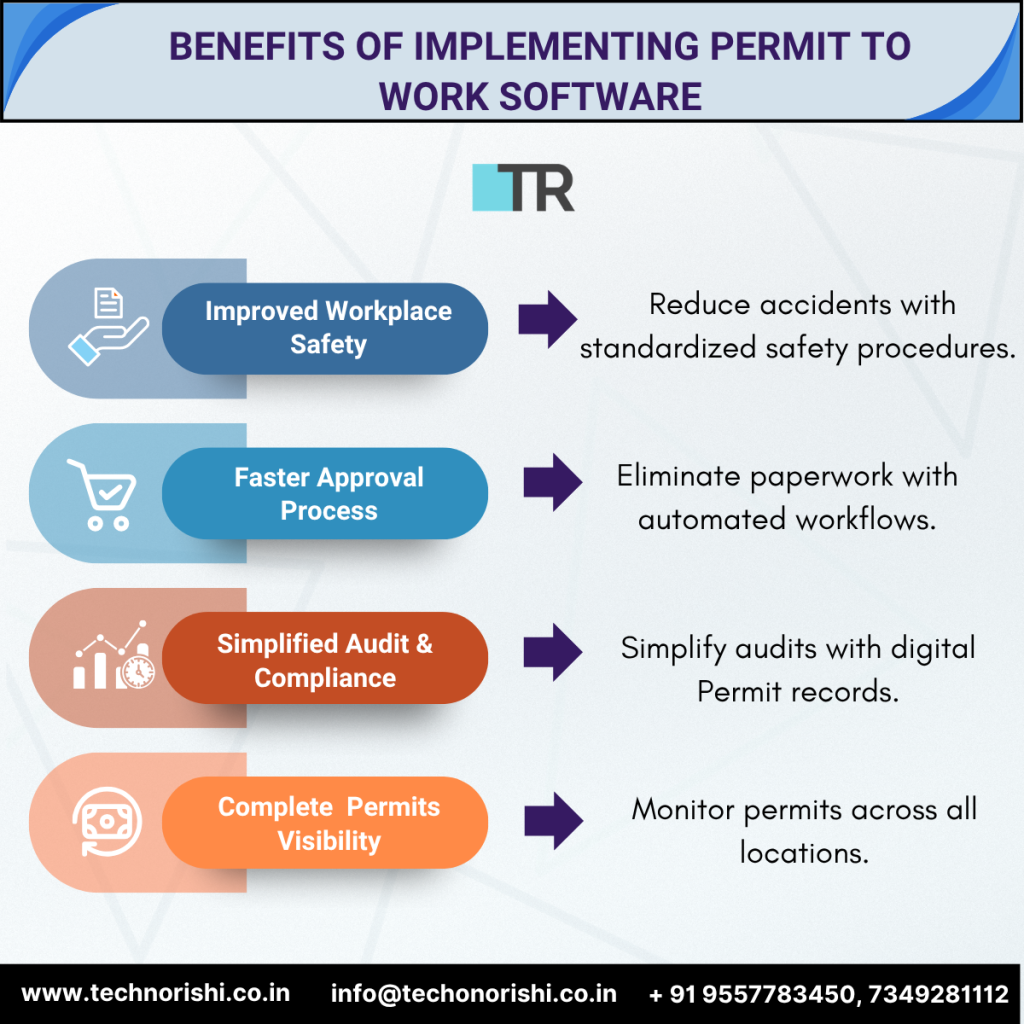
Improved Workplace Safety
Every work activity follows standardized safety procedures before execution, reducing workplace accidents and near misses.
Faster Approval Process
Automated workflows eliminate paperwork and reduce approval time from hours to just a few minutes.
Better Regulatory Compliance
Digital records help organizations comply with ISO standards, OSHA guidelines, and internal safety policies.
Complete Visibility
Managers gain real-time visibility into all active permits across multiple departments and locations.
Reduced Administrative Work
Automation minimizes manual documentation, allowing safety teams to focus on risk management instead of paperwork.
Enhanced Contractor Management
Contractors can submit permit requests digitally while ensuring mandatory documents and certifications are verified before work begins.
Easy Audit Preparation
Since every permit is stored electronically with timestamps and approval history, audits become faster and stress-free.
Choosing the Right Permit to Work Software
Not every software solution offers the same level of flexibility. Before selecting a platform, businesses should evaluate whether it supports:
- Customizable approval workflows
- Mobile accessibility
- Cloud-based deployment
- QR Code integration
- Role-based access control
- Contractor management
- Integration with HRMS or Facility Management systems
- Real-time reporting and analytics
- Document storage
- Multi-location support
A scalable solution ensures the software continues to support organizational growth without requiring major process changes.
Conclusion
Workplace safety isn’t just about following regulations—it’s about protecting people, maintaining operational continuity, and building a culture of accountability.
As organizations become more digital, continuing to rely on paper permits can slow operations and increase unnecessary risks. Permit to Work Software simplifies complex approval processes, improves compliance, enhances visibility, and helps ensure every high-risk task is performed safely.
Whether your organization manages hundreds of contractors or oversees multiple high-risk operations every day, implementing a digital permit-to-work system is a practical step toward safer, smarter, and more efficient workplace management.